Pages

Ads 468x60px

Showing posts with label GUNS. Show all posts

Wednesday, April 16, 2014

Ruger Bearcat Shopkeeper, Sweet and Petite .22 Revolver

.22 Revolver
Lipsey’s exclusive New Model Bearcat Shopkeeper.

Ruger’s classic .22 single-action revolver becomes even more compact with this bird’s head grip version available from Lipsey’s.

Enter the Shopkeeper
Some new-age guru said if you wish hard enough the things you desire will eventually come to you. Thanks to the psychically attuned folks at Ruger, the bird’s-head Bearcat I’ve been thinking of is now available. It’s called the Shopkeeper, in honor of those businessmen who preferred the more easily concealed bird’s-head revolvers for protection in the old days.
The Shopkeeper is based on the current Ruger New Model Bearcat single-action .22 revolver, but with a few key changes. Unlike other versions of this revolver that contain some aluminum components, this one features an all-stainless-steel construction, including the ejector rod housing. The sights consist of a rounded blade up front, and a fixed square notch rear sight that’s milled into the top strap. The barrel and ejector shroud have been shortened from 4 to 3 inches.
To accommodate a shorter distance for the ejector rod to travel, the rod’s lever has been cut into a crescent shape. This allows it to move past the top of the reduced cylinder pinhead, all the way to the frame. The nonfluted cylinder is engraved with the same nature scene that graces other models. The bird’s-head grip is fitted with medallion rosewood grip panels. Like the other Ruger New Model single-actions, the Bearcat has a transfer bar safety that allows the gun to be carried with all six chambers loaded.
As expected, the fit and finish of the Shopkeeper are excellent. Some manufacturers provide factory-installed dings and scratches in the finish of their guns. But Ruger made sure this one arrived in pristine condition, as is only proper. The fit of the trigger guard to the receiver is so nicely done you have to look for the seam.
Smooth Operators
The shorter barrel and rounded grip of the Shopkeeper look terrific, and even better, proved to be fun to shoot as well. The hammer and trigger were both smooth operators, with the short, crisp trigger tipping the Lyman’s digital trigger gauge at 4 pounds, 2 ounces. The bird’s-head grip seats itself comfortably and intuitively in the hand. The revolver’s excellent balance and mild recoil make it a shoot-all-day kind of handgun.
.22 Revolver
The 3-inch barrel and bird’s head grip of the Shopkeeper make it a very compact and handy .22 revolver.
The Shopkeeper was test fired with several flavors of .22 Long Rifle ammunition, ranging from bulk-box varieties to high-performance hollow points. Every round inserted and fired properly, but early on some would not eject, even with repeated taps from the ejector rod. This was not due to the shortened ejector. Removing the cylinder and tapping at the stuck cartridge cases with a cleaning rod showed they were stuck because of some factory-fresh chamber roughness. Over the course of testing, the rough chambers smoothed out and ran as expected.
Since the .22 revolver is technically a sub-compact handgun, accuracy testing was conducted using five 5-shot groups fired from a bench rest at 15 yards. This also happens to be a good plinking distance for new shooters. Groups hovered right around the 1.5-inch mark, with the best groups at the 1.25-inch range. Working from a bench rest at 25 yards was also a satisfying experience, with groups hovering comfortably around the 2- to 2.5-inch range.
What makes the Shopkeeper just that, a keeper, is that it offers both good looks and provides top-notch functionality. This version of the Ruger New Model Bearcat is a Lipsey’s exclusive item. So if you would like one, but you don’t know which shops in your area are authorized Lipsey’s dealers, then visit www.lipseys.com and click on DEALER FINDER to locate one near you.
Lipsey’s Ruger Bearcat Shopkeeper Specifications
Caliber: .22 LR
Capacity: 6 rounds
Barrel: 3”
Sights: Fixed
Frame: Satin Stainless Steel
Trigger: Single-Action
Length: 8”
Weight: 22 oz.
Options: Bird’s Head Hardwood grips, engraving
Suggested Retail Price: $649
Read More ...

Tuesday, April 15, 2014

Hatsan Introduces Whisper-Quiet Air Rifle

air rifle
Hatsan’s BT65
Hatsan has made a name for itself with hard-hitting, highly accurate air rifles.
The Turkish manufacturer has especially won high praises for its line of pre-charged pneumatic rifles, which can tear out a bull’s eye from 75-yards down range. Precise as these guns are, they have earned the unusual reputation of being noisy. But this is a problem the company has aimed to overcome.
Hatsan has introduced a new line of its popular PCP rifles outfitted with some extras that are certain to make them whisper quite without loosing their zip. The Quiet Energy Series are outfitted with full-length barrel shrouds that tapper into metal and plastic baffled suppressors. The result is an air rifle 32-percent quieter than its unmodified counterpart.
Certainly this gives shooters an advantage when picking off flighty game, such as crows or starlings. But the real benefit of Hatsan’s innovations goes to the backyard target shooter. With a barely audible report, the Quiet Energy Series avoids rising the ire of neighbors with sensitive hearing or ones who might not be keen about close-quarters marksmanship.
The QE modifications have been incorporated into Hatsan’s BT65 and AT44-10, giving shooters the choice of rifles that pushes high density lead pellets up to 1250 feet per second. The air guns also come tricked out with all the extras shooters have come to expect from Hatsan.
Both rifles have Quattro two-stage, adjustable match triggers and each are available in three calibers — .177, .22 and .25. Each rifle is outfitted with precision rifled steel barrels and come with adjustable synthetic stocks, easily modifying the length of pull and cheek rest. The guns also come with built-in pressure gauges, allowing shooters to keep an eye on when it’s time to recharge the air cylinder. The PCP rifles come with easily re-loadable magazines that hold 10 .177 or .22 pellets or nine .25, as well.
Hatsan has also outfitted its piston-charged Torpedo 150 for shooters who do not want the hassle of refilling air cylinders.
Air rifles have come a long way and from the clunky versions many cut their teeth on as little shavers. They are now precision instruments, but ones certain to bring the kid out in anyone who gets behind the trigger — whether it be in the field or in the backyard.
Read More ...

Monday, April 14, 2014

Gun Review: Shooting the Taurus CTG29

Taurus CTG29 Review.

In this Taurus CTG29 review, the author found the carbine to be both fun and ideal for home defense.

Chambered in both 9mm and .40 S&W, the newly released Taurus CTG29 carbine is a combination of rugged synthetics and alloy steel that seems tough enough for all kinds of endeavors, from tactical competitions to plinking and home defense.
The Taurus CTG29 carbine is chambered for the 9mm and the .40 S&W  cartridges, and is a combination of alloy steel and synthetic that should be right at home in tough climates. Easy to field strip, the CTG29 comes apart pretty much like an AR-type rifle.
The Taurus CTG29 carbine is chambered for the 9mm and the .40 S&W cartridges, and is a combination of alloy steel and synthetic that should be right at home in tough climates. Easy to field strip, the CTG29 comes apart pretty much like an AR-type rifle.
Hitting the scale at 6.6 pounds empty, this new semi-automatic carbine has a full-length Picatinny-type rail on top with detachable front and rear high-profile sights, ambidextrous safety switch, a pair of 10-round detachable magazines, 16-inch barrel and synthetic skeleton stock. The rear sight is adjustable for windage and elevation, and features both peep and square notch with white outline apertures.
The carbine also comes with a sling and rugged hard carrying case with interior foam padding, plus a hefty cable lock for security. You will also find a cable cleaning tool with brush and slotted patch jag.
The case has four latches and may be locked for travel.
The CTG29 features a straight blowback-operated system and fires from a closed bolt position. The cocking handle is on the left side of the gun ahead of the main receiver, above the barrel when it arrives, but it is reversible to allow charging with the right hand instead. As a right-handed shooter, I just left it where it was.
There is also a molded rail at the bottom of the forend handguard, which is designed for mounting additional rails on either right or left side. I have never seen the need for tricking out an urban carbine with all kinds of accessories. They add weight to the firearm and it is not clear what other tactical advantage that they provide.
Rear sight is adjustable for windage and elevation, and features both a square notch and peep apertures.
One might fit a laser on one side and a flashlight on the other for work in the dark or subdued light, of course, because a lot of shooters utilize those things.
Because of the weight of this carbine, recoil is negligible to non-existent. I fired a fair amount of ammunition through one of two test rifles, and frankly, I cannot recall noticing any recoil at all. It’s probably comparable to a .22 Long Rifle semi-auto, though certainly louder.
One thing I noticed after several rapid-fire drills was that the breech and muzzle smoked pretty well. That may be a result of different propellants in the ammunition I used.

Out to 100 Yards

Because the 9mm and .40 S&W are capable of longer-range effectiveness, it would not be out of the realm of good sense to shoot at a target out to 100 yards, and since mounting a scope is possible with the new Taurus, it will not be surprising to see someone do this.
Disassembly is accomplished by sliding out (from right to left) the rear-retaining pin that holds the top end of the receiver to the bottom. The top pivots forward as on an AR platform, and the bolt assembly is withdrawn at the rear.
Front sight is a simple post with white dot protected by a synthetic ring.
My test gun was chambered for the 9mm round, and the gun went along with me on an early October big game scouting trek in central Washington’s Cascades. It rode around on some pretty bumpy roads and ate a lot of dust, and that didn’t seem to bother it.
My judgment is that this carbine would be a good fit for someone in need of a tough little gun to have in an emergency, and since ammunition supplies are beginning to loosen up a bit, keeping the CTG29 running should not be a problem. It will be even less a problem for anyone who reloads.
For home defense in both rural and urban settings, one could do worse than a carbine that fires either the 9mm or .40 S&W cartridge. There is a variety of ammunition available in either caliber, and my guess is that it will all cycle, as I ran this gun with both hardball and hollow-point 9mm rounds. I’d also suggest that the longer carbine barrel should get the most out of either pistol cartridge.
Ergonomically, this is a well-designed firearm, with a textured grip surface on the front end of the extended magazine well that allows for a non-slip handhold. That didn’t impress me as much as the ample magazine release, which is a rather large toggle confined in its own little space behind the magazine well. Positioned this way, it should be nearly impossible for the magazine to be accidentally released.
Shooting the Taurus CTG29.
The buttplate is grooved to help prevent slippage on the shoulder, and it is pretty tough. Overall length of the G2 is 36 inches, and one thing I quickly learned about it is that the sight radius can be changed a bit from its factory-set 12.6 inches. I ran the rear sight back to 15 inches by simply pressing upward on the keepers on both sides of the rear sight housing and working it back along the rail.

Tight Groupings

At 25 yards, I was able to pull in a couple of pretty tight groups using nothing but the factory sights. No doubt with a scope on this gun, one would be shooting one-holers all day long at twice that range, and probably not bad out to 100.
Out on the trail, I opened up on a pumpkin at 50 yards with a couple of rounds fired off hand and popped that orange blob both times.
One thing I noticed was that the double-stack magazines get pretty stiff to load as you top them off with the ninth and tenth rounds. That’s why it might be a good idea to invest in a magazine loading tool.
Before anyone thinks these are merely pistol magazines, guess again. They appear to be proprietary to the carbine. They are tough, made from steel with bright yellow followers and flat base plates, and may be disassembled for cleaning.
For predator control, the 9mm or .40 S&W both pack a punch, and that goes for predators of the two-legged variety as well as coyotes and other varmints. Because of its short overall length, this carbine will swing well in tight spots, fit in any truck or SUV, and ride along virtually anywhere a firearm might be needed.
The author plugged this Birchwood Casey target using factory sights.
The owner’s manual includes a complete schematic and parts list so the home gunsmith can tinker with this Taurus. If you have the chance to fire one of these guns before buying, take it for a test run. You just might be surprised.
Taurus CTG29
Caliber:    9mm (.40 S&W available)
Action Type:    Semi-auto
Receiver:    Blued
Barrel:    16” blued steel
Magazine:    10 round
Trigger:    N/A
Sights:    Rear adjustable, fixed front
Stock:    Hybric alumuniman polymer
with reinforced steel frame
Weight:    6.6 lbs.
Overall Length:    36”
Accessories:    Cleaning kit
SRP:    $898

Read More ...

Sunday, April 13, 2014

NAA Guardian Bottle Rocket Review

NAA Guardian Review.

Chambered for NAA’s proprietary bottleneck cartridges, these souped-up pocket pistols can be upgraded with a variety of custom features.

North American Arms (NAA) has been providing some of the smallest concealed-carry firearms available since 1971. Their .22 Short, .22 Long Rifle and .22 Magnum Mini revolvers are some of the few handguns available that can be rightfully described as tiny. In 1997, the company expanded their line-up to include a series of stainless steel semi-autos.
Dubbed the Guardian, this pocket pistol is of a fixed barrel, direct-blowback operated design based on the Seecamp .32 ACP. The first version was the Seecamp-sized small-frame .32 ACP. As the popularity of the pistol grew, North American Arms developed a slightly larger version of the platform designed to fire .380 ACP.

Bottling the Pocket Rocket

The Guardians’ rudimentary standard sights (left) can be upgraded with Gutter Snipe, Novak or XS night sight systems. Author Photo
Recognizing that one of the primary limitations of pocket pistols is the small cartridges they employ, NAA teamed up with Corbon Ammunition to develop and standardize two bottleneck pistol cartridges in order to enhance the Guardians’ stopping power.
For the smaller .32 ACP-sized frames, they produced the .25 NAA that was inspired by the 25/32 JBW wildcat cartridge originally conceived by gun writer J.B. Wood. The cartridge consists of a standard .32 ACP case necked down to hold a .251-caliber slug.
\In other words, the bullet of a .25 ACP is launched by the powder charge of a .32 ACP. The result is a significant boost in velocity. Corbon’s .25 NAA 50-grain full-metal jacket loads leave the Guardian barrel with an average speed of 1,050 fps generating 122 foot-pounds of energy, while the 35-grain jacketed hollow points travel at around 1,200 fps, also with 122 foot-pounds of energy.
Using the same bottleneck approach, the .32 NAA cartridge was developed for the larger Guardian frame.
A standard .380 ACP cartridge case was necked down to hold a .32-caliber bullet. Corbon’s 71-grain full-metal jacket load yields around 1,000 fps and 158 foot-pounds of energy and the 60-grain jacketed hollow point round runs at 1,200 fps with 192 foot-pounds of energy.
Recently, Hornady introduced a new .32 NAA load topped with an 80-grain FTX bullet, which flies at an average of 1,000 fps with 178 foot-pounds of energy. Although the NAA bottleneck cartridges will not outperform larger cartridges, such as the 9mm, they do exceed the power levels of many standard .32 ACP and .380 ACP loads.

NAA Guardian Features

The Guardian .25 NAA and .32 NAA pistols feature an all-stainless-steel construction assembled with excellent fit and finish. All of the components are constructed of 17-4 ph stainless steel using various methods.
The slide is machined from a 17-4 ph billet, the frame is investment cast and all of the small parts (hammer, trigger, magazine release) are produced using Metal-Injected Molding (MIM). The only polymer to be found on these pistols is in the black pebble-textured grip panels and the magazine base plates.
Hornady knew they could develop a top-notch round for the little pistol, so they have started shipping a .32 NAA round loaded with an 80-grain FTX bullet that travels at 1,000 fps and produces 178 foot-pounds of energy. Testing this new load in the Guardian showed it to be reliable and accurate.
The all-steel construction does make the Guardian a little heavier than some of their competitors, but the guns are exceptionally reliable, sturdy and resistant to the corrosive conditions commonly found with pocket carry.
Standard Guardians arrive from the factory with fixed sights and two six-round stainless steel magazines, one with a flat base plate and the other with a finger extension.
The exposed hammer of the double-action-only firing mechanism provides second-strike capability in case of a hard primer. The external safety system is the same as that found on a double-action revolver. In other words, there are no levers, switches or buttons to fuss with, just the long and heavy 10-pound stroke of the double-action-only trigger.
But there’s no reason to stick with an out-of-the-box Guardian if you have something else in mind. The company provides their customers with a variety of pistol upgrades through their in-house custom shop. New guns can be built from scratch with the features you want or existing pistols can be sent back to the factory for most of the alterations they offer.
The .25 NAA provided for this review was topped with an excellent set of 3-Dot Novak night sights, and the polymer grip panels were traded out for a set of smooth Hogue Coco Bolo grip panels. The grip frame of this pistol is quite short, with only enough room for a one-finger grip, so the .55-inch-thick wood grips can make the diminutive pistol easier to hold.
The .32 NAA factory sights were replaced by an easy to see XS Big Dot sight set featuring a .16-diameter white epoxy dot front sight with a tritium night sight insert. The grips were replaced with a Crimson Trace LG-441 laser grip, which arrives pre-sighted out to 50 feet.
The grip frames of both test pistols were enhanced with random-pattern stippling applied to the front strap, back strap and the front of the rounded trigger guard.
And because these pistols were ordered from the factory, North American Arms surprised us by adding one of their most popular custom features, namely custom serial numbers. By following a few simple company guidelines, information like nicknames, badge numbers or important dates can all be serialized into the gun. This can make a pistol that is gift for a loved one (or for yourself) truly a one-of-a-kind item.

At The Range

Mastering the Guardian bottleneck cartridge pistols will require the same kind of practice and patience needed to learn the operations of any souped-up pocket pistol.
Small semi-autos with an abbreviated grip frame and a reduced sight radius always require practice. If you are used to shooting double-action revolvers, the long, smooth, 10-pound pull of the double-action-only trigger will feel familiar and will be relatively easy to learn. If you’re a fan of light or single-action triggers, or if you’re new to shooting handguns, then the trigger work will require more practice.
These Guardians were made especially for this review with custom Gun Digest serial  numbers. Custom serial numbers make these guns a true one-of-a-kind gift.
The Guardians tested in this story were made especially for this review with custom Gun Digest serial
numbers. Custom serial numbers make these guns a true one-of-a-kind gift.
The .25 NAA produced a relatively mild level of felt recoil, especially for having a short, one-finger grip. On the other hand, the .32 NAA’s recoil was on par with an Airweight J-Frame .38 Special loaded with defense-grade ammunition. In other words, it had plenty of pep but it was not painful to work with.
The Guardians are intended for close-range defensive applications and so formal accuracy testing consisted of firing five five-shot groups from a bench rest into targets set at 7 yards. Pistols of this size are not generally expected to produce tight groups.
However, the Guardians demonstrated top-notch accuracy for up-close and personal protection. The .25 NAA produced group averages between 1.51 to 1.77 inches, while the .32 NAA kept its groups hovering between 1.53 to 1.71 inches in size. Off the bench, it was easy to keep all shots center of mass at 7 yards during defensive drills. Both pistols functioned flawlessly with all of the loads tested.

Why Choose a Guardian?

With so many makes, models and caliber options in pocket pistols to choose from these days, why do the North American Arms Guardian pistols in .25 NAA and .32 NAA warrant consideration?
The Guardians have a proven design with a track record for durability. The all-stainless-steel construction of the pistols can hold up to the rigors of daily carry.
Some pocket rockets demonstrate a tendency to jam, so it’s important to know the pistol and caliber combination that’s in place as a last line of defense is going to work when called upon. Lastly, the bottleneck Guardians feed reliably and generate a significant boost in stopping power when compared to the other cartridges in their size class.
Read More ...

Saturday, April 12, 2014

Shields and Sigs Leading Pistol Sales in Idaho

pistol sales
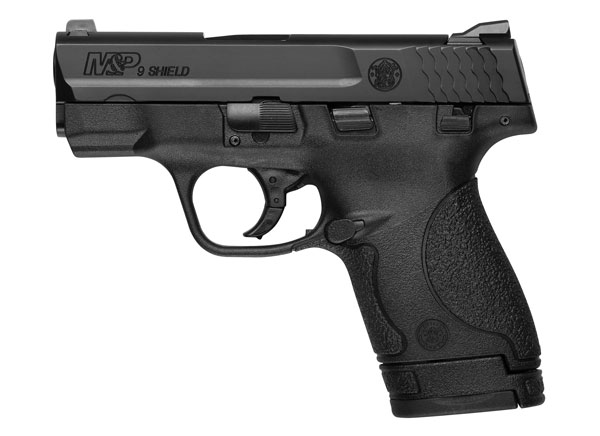
Smith & Wesson M&P9 Shield.
Pistol sales are hot in Idaho.
Smith & Wesson Shield semi-auto handguns, in 9mm and .40 caliber, are very much in demand here with concealed carry and self-defense customers, and sell for $449.
The Sig P238 and P938 are strong movers, too.
“We sell the Sigs as fast as we get them in,” Center Target Sports owner Ed Santos said. The P238 commands $535, the P938 $689.
For accessories, Center Target Sports has seen a great interest in low-powered optics. The AimPoint PRO and T1 Micro red dot sights are very popular, especially with AR shooters, who are always happy to gobble up quality tactical optics.
The only real items that customers are shying away from, Santos said, are long guns and handguns chambered in .22 rimfire. For the fans of the rimfire, there is a fairly obvious reason behind the customers’ aversion to the caliber.
“The lack of rimfire ammo is to blame for that, in our opinion,” he said
Read More ...

Monday, January 13, 2014

AR-15 Trivia: Did You Know?


Modern Sporting Rifle Facts.
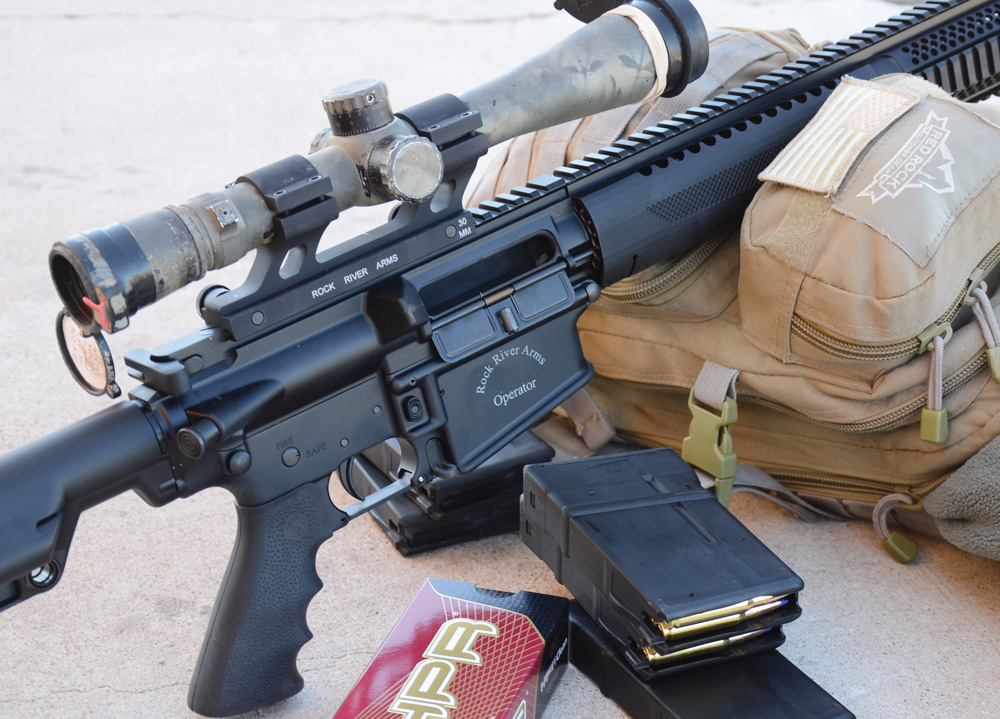
No surprise that the Modern Sporting Rifle or MSR (which includes AR and AK rifle models) is currently the most popular rifle platform.
They have been among the best long gun sellers on store shelves in recent years and are now seen everywhere, from the competitive target range to the big game woods.
But did you know…
  • 66 percent of MSR owners own two or more MSRs.
  • 26 percent of MSR owners purchased their first rifle in 2012 or 2013.
  • Over 33 percent of those who own four or more MSRs purchased their first MSR prior to 1994.
  • Nine out of 10 MSR owners owned a handgun prior to their MSR.
  • 35 percent of MSR owners are current or former military/law enforcement.
  • 55 percent of MSR owners paid under $1,000 for their MSR.
  • 36 percent of all MSR owners purchased their most recent MSR at an independent retail store or a gun show.
  • The average MSR owner is 35+ years old, married and has at least some college education.
Read More ...

Wednesday, January 8, 2014

Sneak Peak at the Glock 41 and 42


When it comes to generating chatter in the gun community, few things can get jaws jacking like Glock. The Austrian-based manufacturer has a large fan base, always champing at the bit over what the company plans to introduce next. And perhaps as of late, no two handguns have produced more chatter than the new Glock 41 and 42.

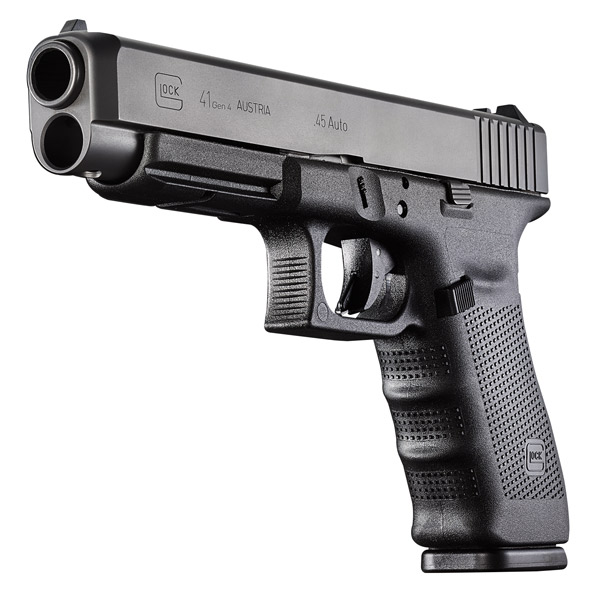
Glock 41

Glock41
Glock 41

The Glock 41 is the company’s answer to those who have wanted its take on a longslide .45 ACP. As Massad Ayoob points out in the video below, the Glock 41 is an amalgamation of features of the company’s other pistols. It has the similar frame to the Gen 4 Glock 21, with the slimmer slide of the practical/tactical Glock 
34 and 35.


Glock 41 Specifications
Overall length: 8.9 inches
Width: 1.28 inches
Height (with magazine): 5.47 inches
Barrel length: 5.31 inches
Length of twist: 1:15.75 inches
Pistol weight without magazine: 24 ounces
Magazine weight full: 12 ounces
Standard trigger pull: 5.62 pounds
Magazine capacity: 13 rounds
Read More ...

Friday, January 3, 2014

3D Printed Metal Gun Hitting the Market


Solid Concepts is putting it 3D printed 1911 on the market.

Solid Concepts has been on a meteoric rise when it comes to cutting-edge firearms manufacturing.
Around two months ago the multi-state based manufacturer announced it had produced the world’s first 3D printed metal gun. Now the company has plans on putting its take on the M1911 on the market.
Solid Concepts announced it will sell 100 limited editions of the handgun, manufactured using the same process as the prototype. But being one of the first to own a piece of the future won’t come cheap.
The company has the 1911’s priced at $11,900. Spendy, but history always demands top dollar.
The guns are made of Inconel 625 (a nickel-chromium alloy) and stainless steel through a process known as Direct Metal Laser Sintering. The procedure fuses layers of metal onto each other, until the end product comes to fruition (refer to the video below for a more in depth explanation).
Outside of some final polishing, the manufacturing process requires no tooling. For Solid Concept’s 1911, this even includes the barrel’s rifling. The lands and grooves are “grown” during the barrel’s manufacture.
Solid Concept’s prototype has faired well, according to the company. The handgun is nearing 2,000 rounds without malfunctioning once. And, as Eric Mutchler points out, the gun’s first iteration was not produced in its strongest possible form.
“The 17-4 Stainless Steel has not been post heat treated because that would further strengthen it and we wanted to test our least strong option first,” the project engineer at Solid Concepts said.
The 100 guns set to be sold come with a wooden showcase box with a 3D printed metal plaque and a certificate of authenticity. The company is also offering buyers the chance to tour their Texas facility to see their gun being printed, and to join their lead additive manufacturing engineers on the range for the first test firing of their limited 1911 gun.
Read More ...

Wednesday, January 1, 2014

Gunstruction Review: Online AR-15 Builder

This online AR-15 builder takes window shopping to a whole new level with interactive controls and the ability to accessorize your dream AR with top-of-the-line real-world accessories.


Online gun building applications certainly aren’t new—Brownell’s AR-15 Builder is but one excellent example—and AR15.com’s version, called Gunstruction, is yet another really good choice. Gunstruction is simple to use and makes it easier to envision your next AR build before dishing out your money.
I recently gave it a spin and found it to be intuitive (with a couple minor hang-ups, noted below) and at least as much fun as watching reruns of Route 66 on the local retro channel.
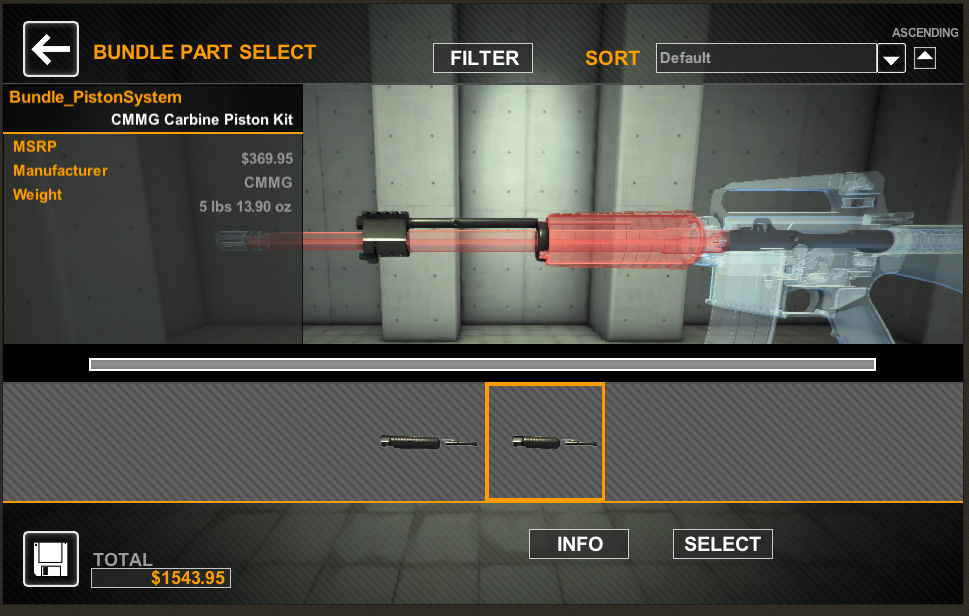
AR15.com Gunstruction.
First you need to install free software in order to view and use the tool. Next, you can either choose to build an AR from scratch—literally part by part—or start with a pre-built platform from Troy, ArmaLite, Stag Arms, LaRue Tactical, Doublestar Corp. or VLTOR, which you can trick out to your heart’s content.
You can swap out uppers and lowers, barrels, trigger assemblies, stocks and operating systems—gas piston kits!
As you make changes, the retail price of parts is displayed and the total gun cost is updated. You can name your gun project and save it in your account. You can come back later and make changes, and add additional gun projects.
There is a ton of cool name brand accessories from which to choose, from bipods and stocks to optics and flash suppressors.
The camera feature allows you to save images of your gun in varying aspect ratios, and you can literally spin, rotate and flip your gun any which way on the screen to see how she looks.
There is quite the selection of custom paint jobs you can apply, too, including all the popular commercial camo schemes. You can also detail with Duracoat or spray paint in every possible “tactical” coloration imaginable.
The only issue I had using Gunstruction was figuring out how to add accessories to the gun after choosing them.
The trick with scopes and flashlights is to add a mount. AR15.com clearly put some thought into making this part realistic, requiring you to get matching mounts for the mounting system and optic you’ve chosen. This is a very handy aspect of the tool simply for getting the right mounts for your scope.
The video tutorial below explains this well.

Conclusion

The AR-15 is like the Jeep of guns. You can swap and customize pretty much everything to build your dream rig. AR15.com’s Gunstruction is a powerful online tool that allows you to do just that—so you know what you’re getting into … well before you hit the trail.
Read More ...

Friday, December 27, 2013

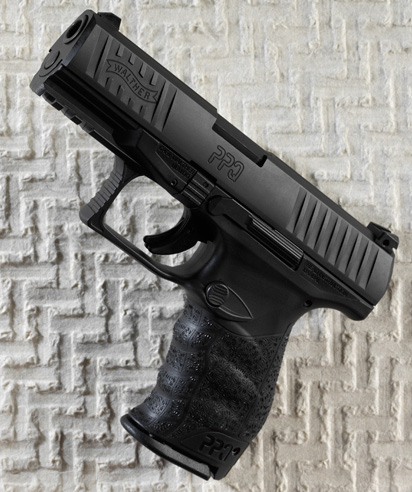
Handgun Review: Walther PPQ M2

Smooth shooting and beautifully engineered, the German-made Walther PPQ M2 handgun strikes the perfect balance between form and function.

If gun manufacturers produced commercials to appear on any of the major networks, Walther’s ad for their PPQ M2 would look like a Lexus commercial. A trusting, deep baritone voice would speak of classic lines, ergonomics, performance, form, function, beauty and even art. Indeed this gun to a true firearm enthusiast is a piece of modern engineering art, for how it balances in the hand and shoots as much as for its appearance.


Walther PPQ M2 Ergonomics Defined

It is said by most shooting instructors that for effective use, the handgun must become an extension of the hand. The PPQ M2 does.
I know from a concealable standpoint, there’s no shortage of shooters who like a single-stack semi because it’s more slender. However, after shooting a number of both single-stack and double-stack guns, I simply find I shoot a double-stack better.
The grip fills my palm and leaves me with less indecision on where to precisely place my hand. I’m able to control the gun better, both when aiming and during recoil, which improves follow-up shot placement considerably.
The Walther PPQ M2.The grip on the PPQ M2 curves comfortably in the rear to form a swell that naturally fills the palm for a surer hold. The handgun comes with three easily interchangeable back strap panels that can be removed and attached by simply removing a single pin with a small punch.
The medium strap installed on my test gun fit my hand perfectly, though there is a smaller one for shooters who prefer less swell or have smaller hands and a larger one for shooters who want even more to hold.
The polymer grip has mild finger grooves in the front and gentle contours along the side and is textured with a nonslip cross-directional surface. The texture enhances the shooter’s hold on the gun while firing without chewing bare hands up during high-volume target sessions.
Design didn’t end at the grip. Edges are rounded to prevent snagging when holstering or unholstering, while the trigger guard indents where it attaches to the front of the grip for additional finger comfort.
The machined slide is Tenifer coated for corrosion resistance and sports vertically angled lines notched along its length to create visual appeal, as well as shave a little weight from the gun.
The result is a handgun that looks remarkably stylish and distances itself visually from many of the clunkier, albeit excellently shooting models available from Walther’s major competitors and even, to some degree, within its own lines.
But beauty is meaningless without functionality and there, the PPQ M2’s features deliver as well with an integrated rail beneath the barrel for the mounting of a laser or light and low-profile three-dot polymer combat sights that provide for quick target acquisition.
The sight dots are bright white, which imprinted on the black posts provides for easy sight alignment against both light or dark targets and backgrounds. An extended ambidextrous slide stop provides for easy lock-open from either side of the gun, even when wearing gloves.
The PPQ also has a trigger safety and internal safeties as well as a loaded chamber indicator, an oversize magazine release that can be reversed for left-handed operation and of particular interest where performance is concerned, Walther’s Quick Defense Trigger, a super smooth squeezing trigger with a light 5.6-pound trigger pull (mine actually fired at just under that), less than a half-inch (.4 inch to be precise) trigger pull and a .1-inch reset for lightning fast follow-up shots.
As one Glock fan joining me during test firing observed, “This trigger is smoother than my Glock. It feels almost like a competition trigger.”
The width of the PPQ M2 is 1.3 inches, again, wide enough to enhance in-the-hand comfort without making the gun so bulky as to preclude it from serious carry consideration. This is certainly no subcompact-sized gun for those seeking today’s ultra-slim designs, but in my experience, particularly with newer shooters (and even some not so new), shooting smaller guns can also be more difficult.

Read More ...

Thursday, December 26, 2013

Big-Bore Handgun Clips


Big-bore handguns aren’t for the faint of heart or the weak of wrist. The guns push the limits of what can be fired away from the shoulder. And they have become the objects of affection for hunters and target shooters alike. What is a big-bore? Well, it is a relative term. Max Prasac, author of Big-Bore Revolvers draws the line at the .41 Magnum. For this montage we’re going a bit bigger — .44 Magnum and up. So enjoy your stroll through the wonderful world of big-bore handguns and take a gander at 10 of these hand cannons in action.


Read More ...

Sunday, December 15, 2013

Used Handguns Enjoying a Thriving Market

Used revolvers and other handguns have jumped up considerably in value. Firearms specialist Scott Lutz said, Colt Diamondbacks are especially popular, fetching anywhere from $1,500 to $3,000 apiece, depending on condition and engraving.


Any Smith & Wesson revolver no longer in production is getting Blue Book-plus prices, especially the small- and medium-sized models. Lutz recently watched a Model 19 K Frame in .357 mag, with a 2.5 inch barrel, go for $600, when $400 would have taken the same revolver just two years ago.


The H&R Sportsman, a 9-shot .22 LR caliber revolver, is quite popular at the lower priced end of the collectible’s market. Usually selling for under $400 apiece, even for vintage examples, people are assembling nice collections of these durable and reliable revolvers—without going broke competing with the Smith & Wesson and Colt collectors.
Read More ...

Thursday, December 12, 2013

Collecting Antique - 22 Caliber Revolvers

Cased Smith & Wesson No. 1, Third Issue revolver with mahogany case and a empty carton of .22 caliber cartridges sold for $4312.50 in a Rock Island Auction. It goes to show that antique .22 caliber revolvers run the gamut from the common affordable variety to exquisite high end custom.
Cased Smith & Wesson No. 1, Third Issue revolver with mahogany case and a empty carton of .22 caliber cartridges sold for $4312.50 in a Rock Island Auction. It goes to show that antique .22 caliber revolvers run the gamut from the common affordable variety to exquisite high end custom. Photos Courtesy of Rock Island Auction Company.


A Colt 1861 Navy revolver at a $700 asking price is a fine gun, and a worthwhile addition to any gun collection. But what does the gun enthusiast who doesn’t have that kind of money to spend on one gun do? Consider the affordable antique .22 caliber revolver.

Editor’s Note: “This article is excerpted from the 1973 edition of the Gun Digest annual and prices expressed do not represent modern gun values. You can read eight decades of good gun writing with the 3-disc set of all Gun Digest editions from 1944 – 2013. Order here at gundigeststore.com.

The percussion purist may laugh, but consider the antique .22-cartridge revolver. In that field, $700 will buy 20 or more guns, these covering the period from the first American cartridge revolver, made in 1857, through the 1890 models that have most of today’s modern revolver features.

The typical .22 antique cartridge revolver is a compact seven-shot arm with a 2- or 3-inch barrel and hardwood, bird’s-head grips. They’ll weigh about 10 ounces, their length a little over 6 inches. Most were made to fire a .22-caliber Short, but not the .22 Short we know now. The smokeless powder of today is too powerful for your antique .22 so don’t ever try it.

The .22-Rimfire History

The story of the small revolvers began in 1854 with the patent of a metallic cartridge by Horace Smith and Daniel B. Wesson. To enable them to manufacture a revolver for this cartridge they had to acquire the patent of Rollin White, a former Colt employee, who held a patent issued April 3, 1855, for a bored-through cylinder to accommodate the breech loading of cartridges.

Rollin White had tried unsuccessfully to sell the rights to Colt. These patents and subsequent improvement patents gave Smith & Wesson (S&W) the sole right to the breech-loading cartridge revolver market for 12 years, until the expiration of those rights in 1869. During this period, S&W produced some 126,000 .22-caliber revolvers in three variations of the model No. 1, plus .32-caliber types as well.

Other makers were not unwilling to try to circumvent these patent rights. White, as part of his contract with S&W, defended the patent vigorously through many court cases. Many well-known names were ordered to cease manufacture, among them Allen & Wheelock, Moore Patent Firearms Co., L. W. Pond Co. and E. A. Prescott. A few companies became licensees, and their revolvers were thereafter marked “Made for Smith & Wesson.” These infringing guns, which usually show a marked resemblance to the S&W original, provide an interesting comparison.

Early S&W .22 revolvers were carried by Civil War soldiers as personal pocket weapons. Their use or effectiveness was minimal but they provided some feeling of protection. Following the Civil War, the little .22 was the traveler’s companion by stagecoach and train. The homeowner and shopkeeper had one in the drawer for protection against itinerants. Despite the publicity given to the two-shot Derringer, ladies of the evening and gamblers often preferred the compact seven-shot revolver. Young boys found them a must for July Fourth celebrations, with blanks of course.

In 1870, the S&W patent expired. Renewal was denied, some say, because President Ulysses S. Grant was still irked about poor Northern ordnance supply during the Civil War. The gates were opened and some 50 manufacturers began turning out .22-caliber revolvers of varying quality. Some were priced as low as $6, and the quality reflected this price. Possibly because the maker didn’t care to share responsibility for malfunction or accident, numerous guns carried only a pet name for identity.

Mail order houses that contracted with a manufacturer sold these for their production. Most often, the mail order firm name did not appear on the gun. Such names on the barrel as Protector, Tramps Terror, Little Giant, ad infinitum, were the only markings.

One manufacturer might produce 25 to 50 variations of the same model with only a name change and a slightly different grip or finish.

Many of these “name-only” revolvers can be traced to a maker, but the process is often difficult. In the more specific area of known manufacturer’s models, the author has compiled a table of some 50 makers, including brief specifications of their early .22 models and the range of their current values to collectors.
Prices and Value

It is worthwhile to remember Oscar Wilde’s definition of a cynic, quoted also by C. E. Chapel in his handbook, as one who “knows the price of everything and the value of nothing.” You may value a revolver in very good condition that fills a void in your collection beyond any book value. Finding such a piece is an exciting discovery and a thrill that cannot be calculated in dollars.

Interest in the small .22-caliber revolver field is increasing, but fortunately prices have not gone upward quite as rapidly as have many others of makes and types.


If you select this area as your specialty, you will find prices range from $20 to $50 for most makes, with such better-known and higher-quality names as Colt, Remington and S&W bringing $75 dollars or more. First models, obviously, are worth more, but few values have gone over $200.
Read More ...